MR Mold Removal Miami FL water damage restoration · Miami, FL

Water Damage Restoration

Water Removal in Miami, FL

Water removal for Miami condo units hit by a leak from the unit above, with the documentation and insurance steps explained first.

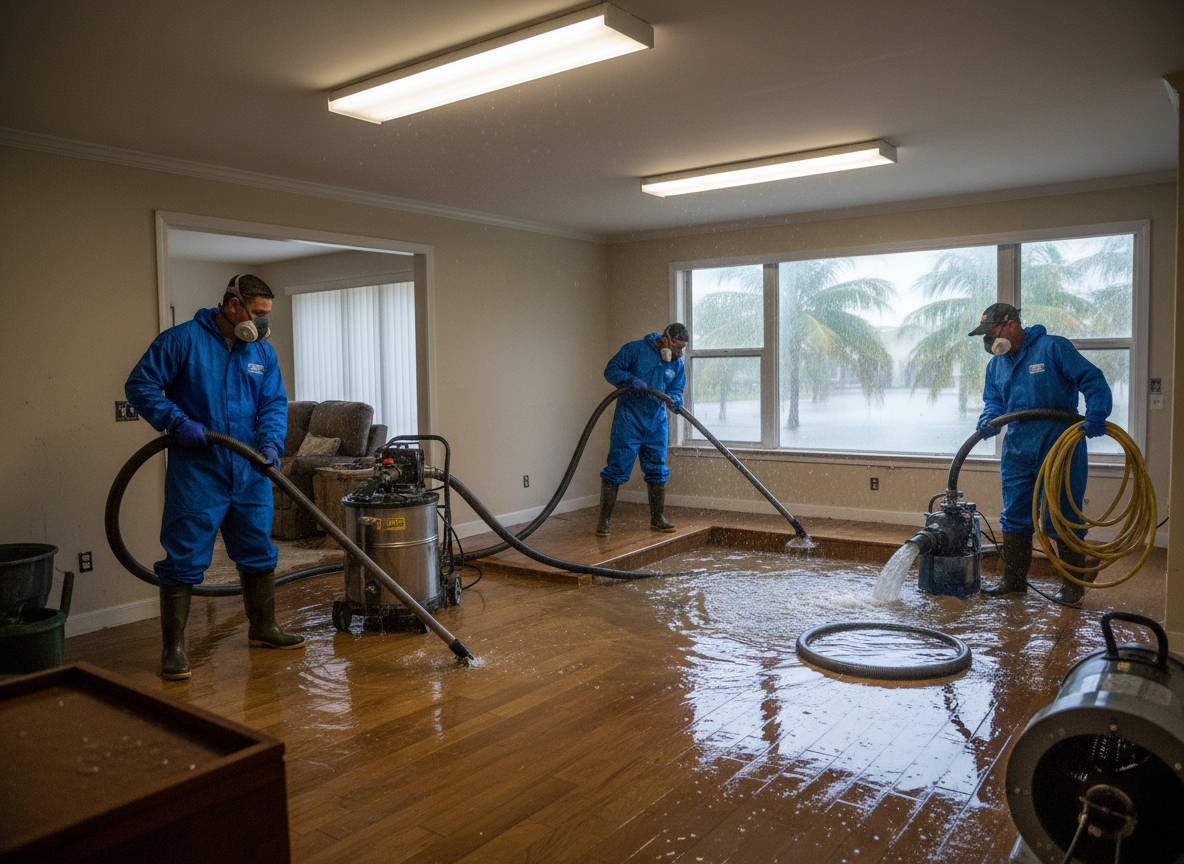
Water dripping from a ceiling light in a Miami condo rarely starts in your own unit. A failed supply line, a washing machine hose or an overflowing tub upstairs can send water through the slab gap and into your ceiling, walls and floor within minutes. Our water removal miami service gets the standing water out of your unit, records where it came in and how far it spread, and gives you that record in writing, so the conversation with your insurer, your association and your neighbour starts from facts.

Technician insight

In a Miami condo, the worst leaks often start one floor up: a supply line or overflowing tub in the unit above sends water through the ceiling below. Owners ask whether they can sue the neighbour. The more useful first moves are to document, notify your own insurer inside the 1-year window, and know that Florida's condo statute leaves in-unit finishes such as flooring, drywall coverings and cabinets to the unit owner, not the association.

Mold Removal Miami FL — water damage restoration in Miami

Good to know

Water Removal — FAQs

Still have questions? We're happy to talk it through.

+17869470281
+ Can I sue my upstairs neighbor for water damage in Florida?
That is a legal question, and we do not give legal advice; ask a Florida lawyer. What helps in any case is a clear record: photos, moisture readings, the date of loss and who you notified. Also notify your own insurer within the 1-year window under section 627.70132.
+ How much is water clean up?
Price depends on how much water there is, how many rooms and ceilings it reached and what material must come out. We price each job after an on-site assessment and do not publish a fixed price.
+ Who pays for water damage inside a Miami condo unit?
Under section 718.111, the association's property insurance excludes in-unit floor, wall and ceiling coverings, built-in cabinets, countertops, appliances and similar items. Those are the unit owner's responsibility. Check your unit policy and ask your insurer.
+ What is the difference between water removal and drying?
Water removal clears the standing water from floors, fixtures and reachable cavities. Drying pulls the moisture left in drywall, slab and cabinets with air movers and dehumidifiers. They are separate stages and should be documented separately.
+ How fast does a ceiling leak need to be dried?
The EPA advises drying water-damaged areas and items within 24 to 48 hours to prevent mold growth. Water inside a ceiling or wall stays there after the leak stops, so it needs removal and drying, not just time.
+ Should I wait for the association before removing water from my unit?
Notify the association and the owner above so the source is stopped, but do not leave water sitting while you wait. Photograph everything first, then have the water removed. Under section 718.111, the in-unit finishes that get wet are usually the unit owner's responsibility anyway.

Need Mold Removal in Miami, FL?

Talk to a local mold removal company serving Miami and nearby neighborhoods.

Call now Get a quote